
Sudbury, Suffolk
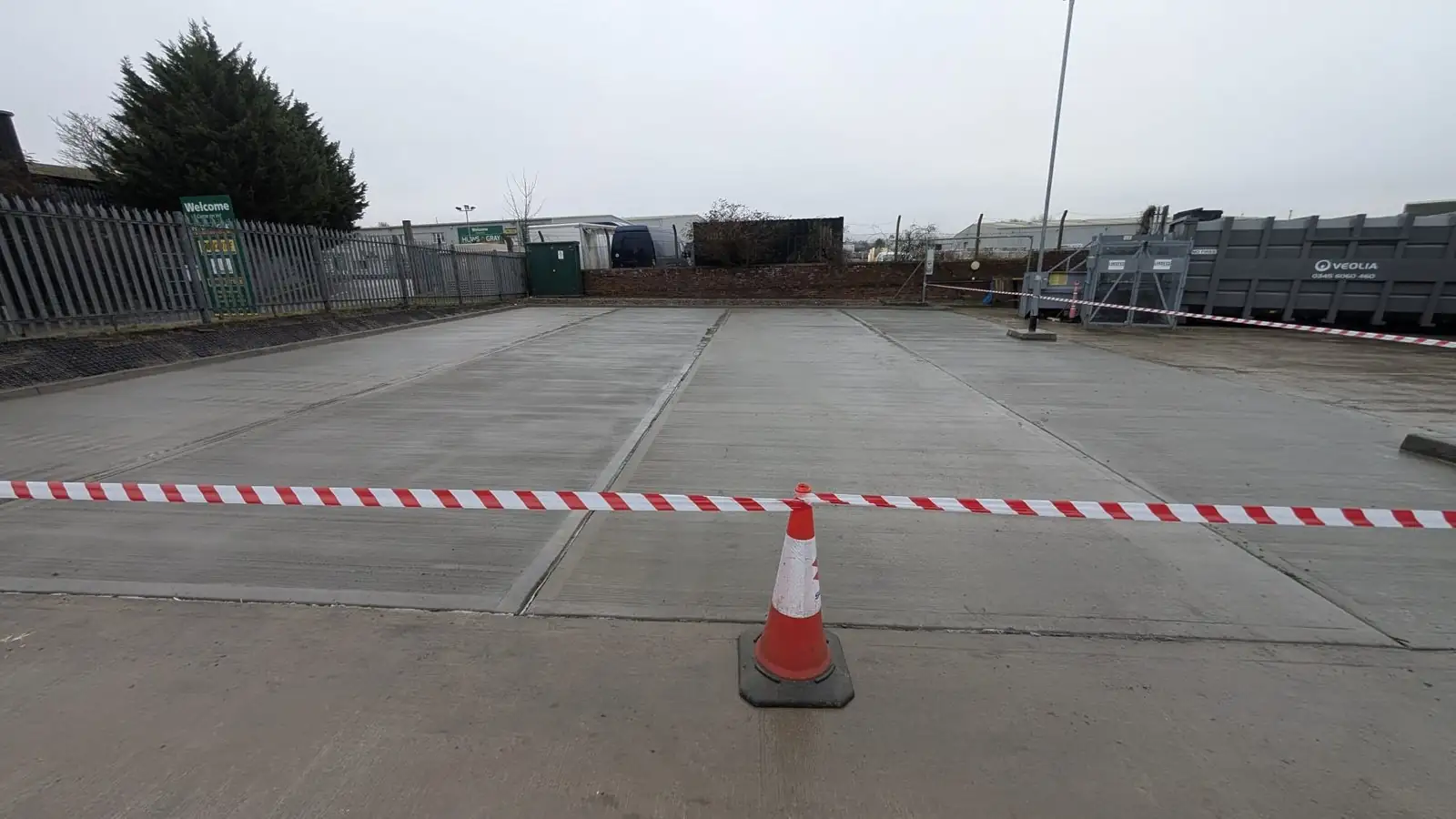
Concrete yard works
Laid in bays and finished under lights, so the site stayed usable while the concrete went down.
TypeConcrete yard
LaidIn bays
CountySuffolk
Concrete specialists
Aprons, yards and hardstanding, poured to the levels required and built to last. External concrete takes as much punishment as the floor inside, and the weather on top of it.
What's involved
Standing water, broken edges and a yard that turns to slurry in January are all set up at the groundwork stage.
An apron is where everything happens: loading, turning, tipping, parking. It gets point loads from machinery, it gets the frost, and it has to shed water rather than hold it against the building.
We build aprons, yards and hardstanding as part of the same package as the building, or on their own as a standalone job. Either way, the falls, the drainage positions and the joint layout get decided before anyone orders concrete.
Where new concrete meets existing, or internal meets external, we detail that junction properly. It's the first place a badly built yard fails.
Our approach
How we think about every bit of concrete we lay — inside or out.
At JK Construction, we understand that agricultural concrete is about much more than simply preparing the ground and pouring a slab.
We have extensive experience constructing concrete floors, yards and aprons in agricultural and industrial environments, where the finished concrete needs to cope with heavy plant, machinery and constant day-to-day use.
We understand the importance of getting the complete build-up right — suitable sub-base preparation and compaction, slab thickness and concrete specification, reinforcement where required, correct falls, drainage and joint positioning. We also regularly install underground drainage, service ducts and crossings, so these can all be incorporated into the works before the concrete is poured.
Falls and levels are particularly important on farm projects. Whether we're directing water towards drainage channels, gullies or external areas, we set the levels out properly from the outset rather than trying to create falls during the pour.
We also understand the loads agricultural floors are subjected to. A loaded telehandler, tractor or other heavy machinery doesn't simply impose its overall weight uniformly across the floor — significant loads are transferred through individual tyres and relatively small contact areas. That's why the complete construction of the floor, from the formation and sub-base through to the concrete slab itself, is important.
Just as importantly, we understand how these floors are actually going to be used. Doorways, high-traffic areas, machinery routes, drainage runs, service ducts, slab edges and transitions between internal and external concrete all need consideration before work starts.
Our experience means we approach agricultural concrete as a complete working floor rather than simply an area of concrete to be laid. The aim is to construct something that is practical, correctly drained and capable of standing up to the environment and machinery it will be exposed to for many years.
Specification
Commercial and agricultural ground-bearing slabs, custom-engineered for high-traffic and industrial use. Figures vary with the loadings — these are the ranges we work within.
Recent jobs
A working concrete yard at Sudbury, and aprons alongside new agricultural buildings.
Sudbury, Suffolk
Laid in bays and finished under lights, so the site stayed usable while the concrete went down.
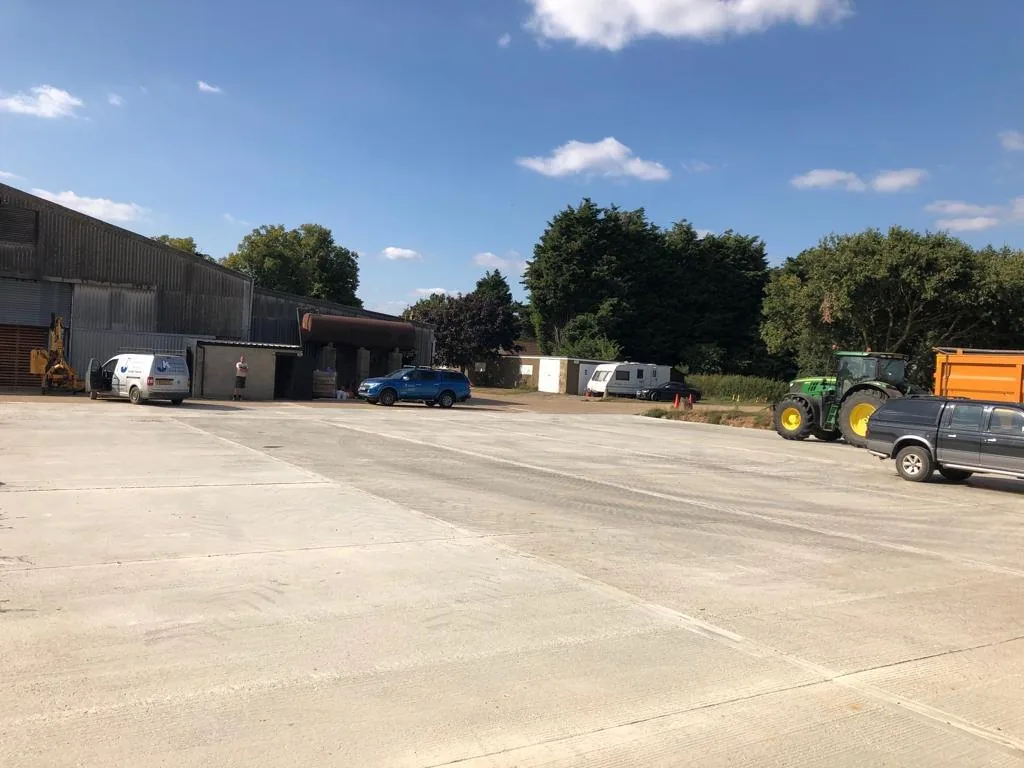
Suffolk
A working yard laid to fall, with the drainage positions set out before any concrete was ordered.
Qualifications
Our own operators, on our own plant, with the certification to run it.
Start a project
Tell us the site, the sector and roughly when you want to start. We'll come back with a clear price and a realistic programme — no jargon, no surprises on the final invoice.
Send an enquiry